How to Start a Franchise: Complete Beginner-Friendly Business Guide
Learning how to start a franchise is one of the most popular ways to enter entrepreneurship with an established brand model. Instead of building a business from scratch, franchising allows you to operate under a proven system with existing branding, training, and support.
If you are researching franchising, this guide will walk you through every step, including costs, requirements, funding options, and real-world examples to help you make informed decisions.
Whether you’re a first-time entrepreneur or expanding your portfolio, understanding franchising can significantly reduce business risk for a small business owner.
What Is a Franchise?
A franchise is a business model where a company (franchisor) allows an individual (franchisee) to operate a business using its brand, systems, and products.
In return, the franchisee typically pays:
- An initial franchise fee
- Ongoing royalty fees
- Marketing contributions
For example, popular franchise examples include:
- Fast food chains
- Coffee shops
- Fitness centers
- Retail stores
- Service businesses
Overall, franchising is attractive because it offers a ready-made business structure.
Why Start a Franchise Business?
Many entrepreneurs prefer franchising over starting independent businesses.
Advantages of Franchising
- Established brand recognition
- Proven business model
- Training and support
- Lower startup risk
- Marketing assistance
Ultimately, these benefits make franchising a strong option for beginners.
How to Start a Franchise: Step-by-Step Guide
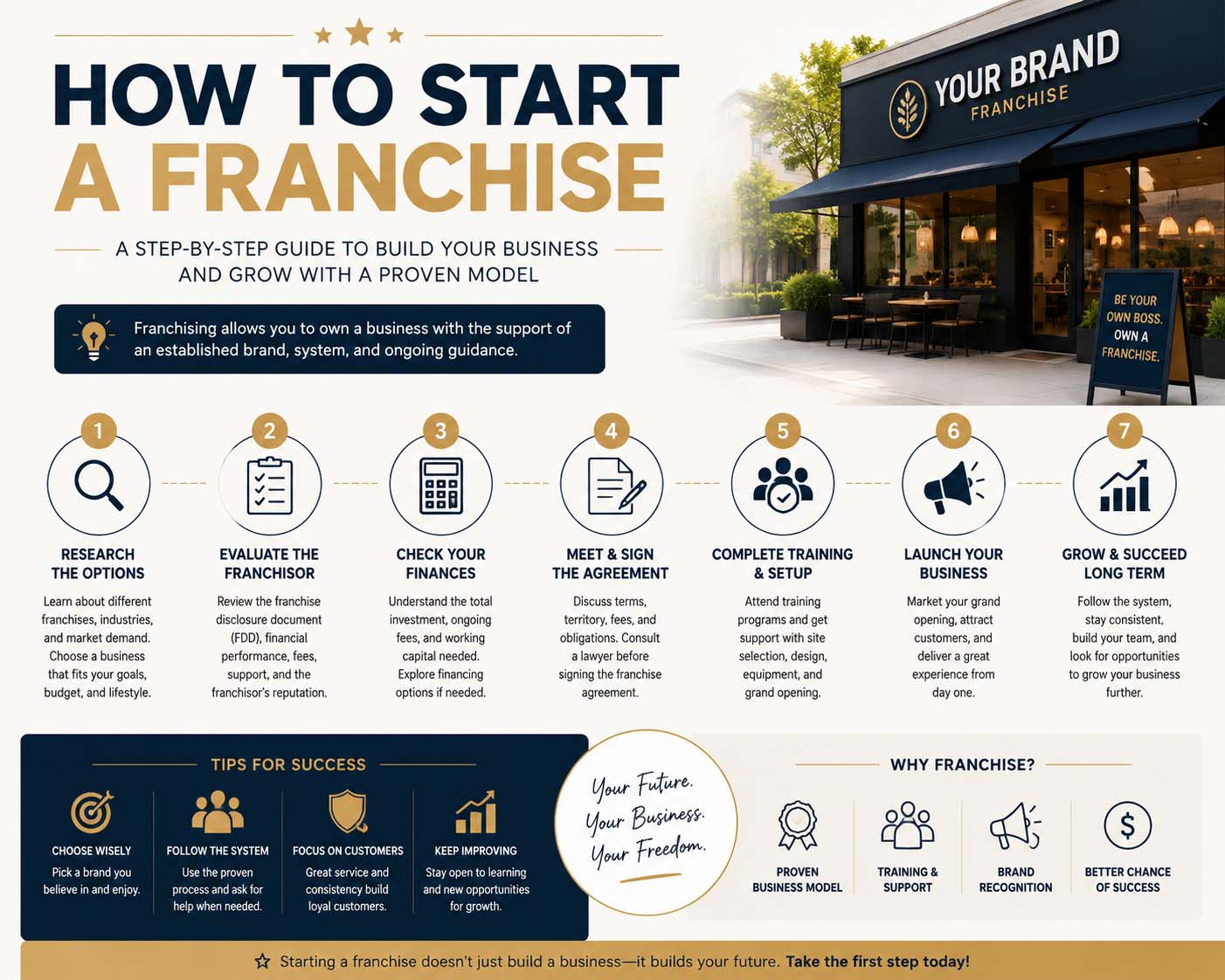
If you’re learning how to start a franchise business, following a structured process is essential.
Step 1: Research Franchise Opportunities
Start by exploring industries that match your interests and budget.
For example, popular sectors include:
- Food and beverage
- Fitness and wellness
- Cleaning services
- Education and tutoring
- Retail and convenience stores
Look for franchises with strong market demand and support systems. Additionally, understanding What Is a Target Market can help you identify the customers a franchise should serve.
Step 2: Evaluate Your Franchise Budget
Understanding costs is critical before committing.
For example, franchise expenses may include:
- Franchise fee
- Equipment and setup costs
- Location rental
- Staff salaries
- Marketing expenses
Therefore, this step ensures you choose a franchise that fits your financial capacity.
The FDD contains important legal and financial information such as:
- Franchise obligations
- Fees and royalties
- Contract terms
- Profit expectations
- Restrictions
Always review this document carefully or consult a legal advisor.
Step 3: Secure Franchise Financing
Funding is often required to start a franchise.
For example, common funding sources include:
- Personal savings
- Bank loans
- Small business loans
- Investor partnerships
This is especially important for beginners entering franchising.
Step 4: Choose a Franchise Location
Location plays a major role in franchise success.
For example, consider:
- Customer traffic
- Competition
- Accessibility
- Rental costs
- Local demand
In particular, What Is Retail provides useful context for franchises serving customers through physical stores. Ultimately, a strong location can significantly increase revenue potential.
Step 5: Sign the Franchise Agreement
Once approved, you will sign a legal agreement with the franchisor.
This contract outlines:
- Rights and responsibilities
- Operational guidelines
- Branding requirements
- Payment structure
At this stage, you officially become a franchise owner.
Step 6: Complete Franchise Training and Setup
Most franchisors provide training programs covering:
- Business operations
- Customer service
- Marketing strategies
- Product or service delivery
Afterward, you will set up your physical or digital business location.
Step 7: Launch Your Franchise
After setup and training, you officially open your franchise.
For example, successful launch strategies include:
- Local marketing campaigns
- Social media promotion
- Opening events
- Introductory offers
As a result, a strong launch helps attract early customers and build momentum.
How to Start a Franchise With No Money
A common question is how to start a franchise with no money.
While most franchises require investment, there are a few possible approaches:
Low-Cost Franchise Options
Some franchises require lower initial investment or offer financing support.
SBA Loans and Government Funding
In some countries, small business loans may help cover startup costs.
Investor Partnerships
You can partner with investors who provide capital in exchange for profit sharing.
Franchise Financing Programs
Some franchisors offer in-house financing options for qualified candidates.
Although starting without money is challenging, creative funding solutions can help reduce upfront barriers.
How Much Does It Cost to Start a Franchise?
Typical ranges include:
- Low-cost franchises: $10,000–$50,000
- Mid-range franchises: $50,000–$200,000
- Large franchises: $200,000+
Generally, expenses include equipment, training, and operational setup.
How Much to Start a Chick-fil-A Franchise?
Many entrepreneurs search for how much to start a Chick-fil-A franchise or how much does it cost to start a Chick-fil-A franchise.
Chick-fil-A is known for having one of the lowest franchise entry fees in the industry.
Key Insight
- Initial franchise fee is relatively low (around $10,000)
- However, Chick-fil-A retains ownership of the restaurant
- Franchisees are selected through a highly competitive process
Unlike many franchises, Chick-fil-A covers most startup costs, but operators must share a percentage of profits and follow strict operational guidelines. In addition, How to Start a Restaurant provides broader guidance on planning a food-service business.
Franchise Business Strategy Tips
Success in franchising requires more than just ownership.
Focus on Customer Experience
Excellent customer service helps drive repeat business.
Follow Franchise Systems
Franchises succeed because of consistency—therefore, follow the proven system.
Local Marketing Efforts
Even strong brands need local visibility through:
- Social media ads
- Community engagement
- Local partnerships
Additionally, a Market Development Strategy can help identify new customer segments and geographic opportunities.
Track Financial Performance
Monitor revenue, expenses, and profit margins regularly.
Build a Strong Team
Hire and train employees who align with brand standards.
Moreover, a clear Business Level Strategy can help define how the franchise competes and delivers value within its market.
Common Mistakes When Starting a Franchise
Avoid these common errors:
Choosing Only Based on Brand Name
Not all popular brands guarantee profitability.
Ignoring Location Research
A poor location can reduce business performance.
Underestimating Costs
Always account for hidden expenses.
Weak Marketing Efforts
Franchises still require active promotion.
Lack of Commitment
Franchise ownership requires consistent effort and management.
Real-World Example of Franchise Success
A small investor opening a coffee franchise in a busy urban area may benefit from:
- High foot traffic
- Established brand trust
- Proven menu and operations
- Corporate marketing support
As a result, this combination often leads to faster growth compared to starting an independent café.
Franchise vs. Independent Business
| Feature | Franchise | Independent Business |
|---|---|---|
| Brand Recognition | High | Low initially |
| Startup Risk | Lower | Higher |
| Creative Freedom | Limited | Full |
| Support System | Strong | Minimal |
| Startup Cost | Higher | Flexible |
Ultimately, this comparison helps entrepreneurs choose the right path.
Frequently Asked Questions About How to Start a Franchise
How to Start a Franchise?
To start a franchise, research opportunities, evaluate costs, secure funding, sign a franchise agreement, and follow the franchisor’s system.
How to Start a Franchise With No Money?
You can explore financing options, loans, investor partnerships, or low-cost franchise opportunities.
How Much Does It Cost to Start a Chick-fil-A Franchise?
Chick-fil-A requires a relatively low initial fee but is highly competitive and operates under a unique ownership model.
Is Franchising Profitable?
Yes, but profitability depends on location, management, and brand strength.
Do Franchises Guarantee Success?
No. While they reduce risk, success still depends on execution and business management.
Conclusion
Understanding how to start a franchise is essential for anyone looking to enter entrepreneurship with reduced risk and structured support. Franchising offers a proven business model, but success depends on research, planning, and strong execution.
Whether you’re exploring how to start a franchise business, researching how to start a franchise with no money, or analyzing how much does it cost to start a Chick-fil-A franchise, careful preparation is the key to long-term success.